Roots, modernizing a classic Canadian brand.
How do you redesign a national retailer's digital experience without losing the thing that made it a national retailer?
Executive summary
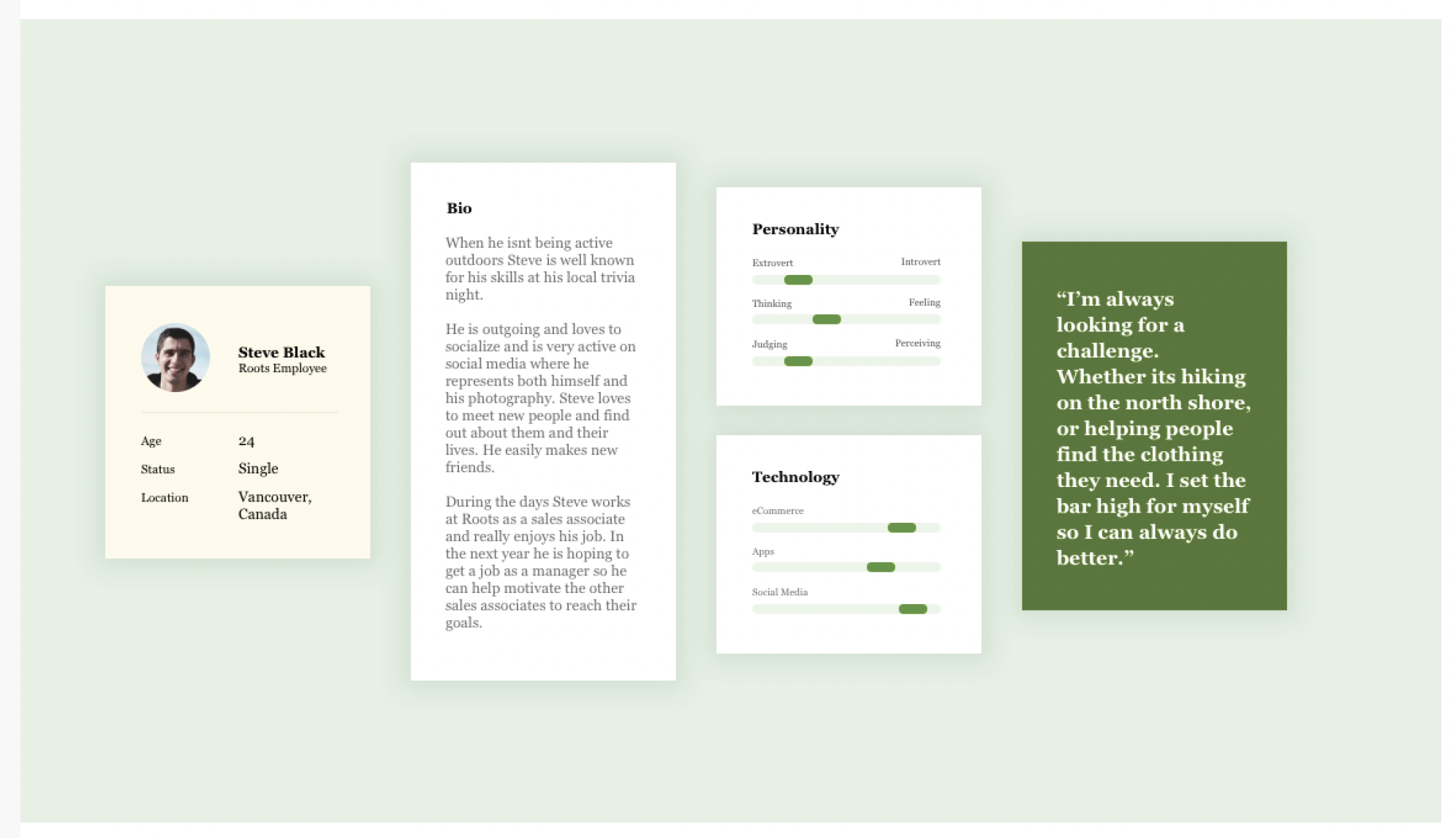
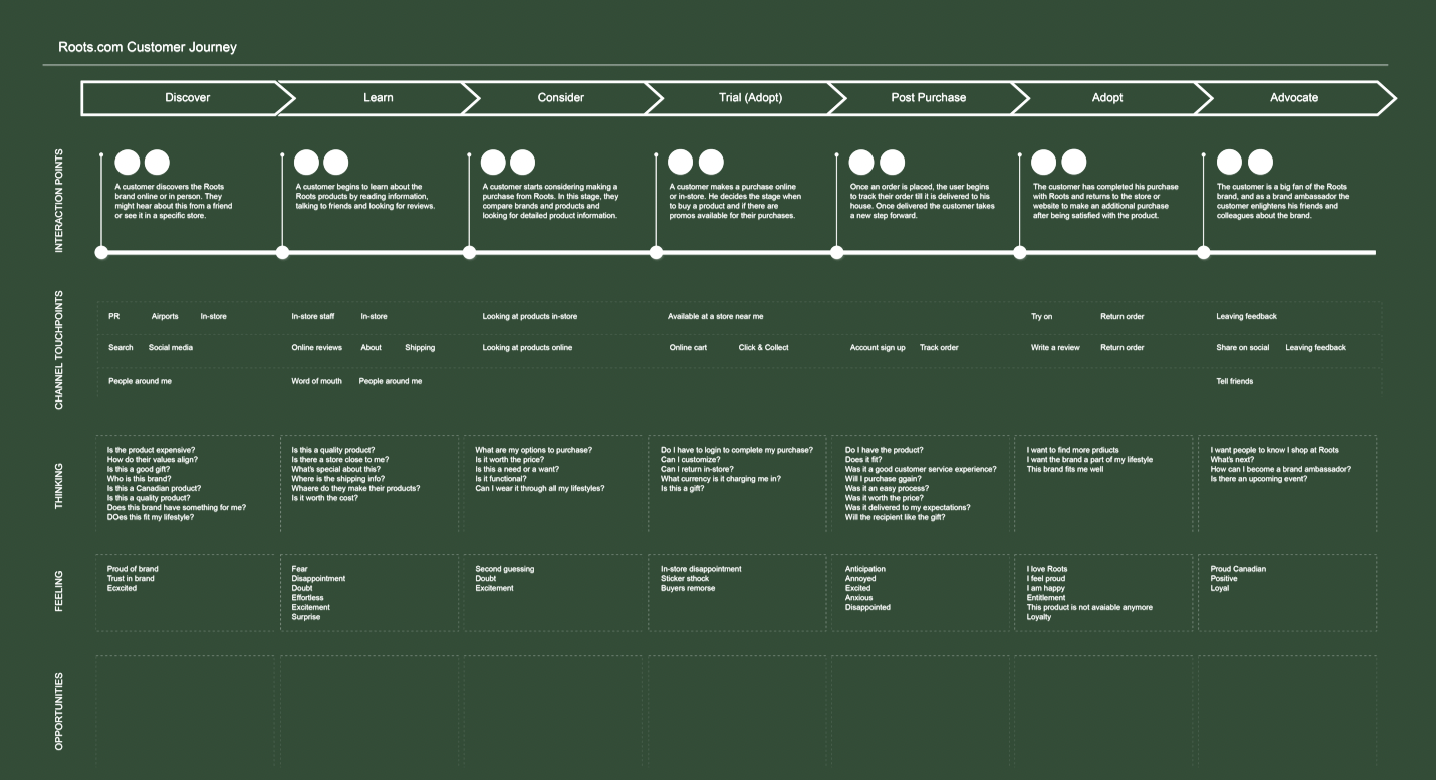
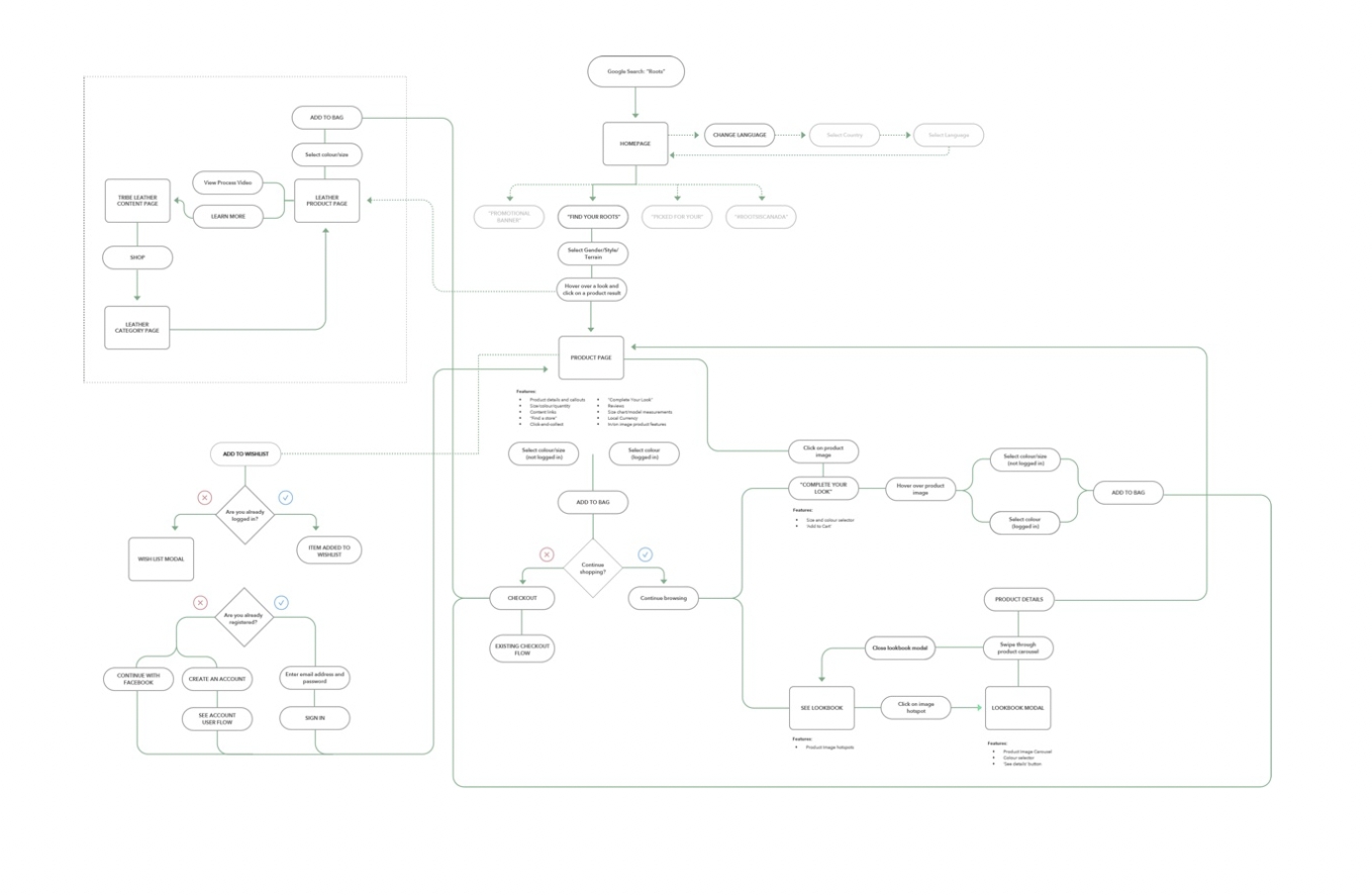
Roots is one of Canada's most recognizable retail brands. Its digital experience had accumulated years of additions and inconsistencies. I led a complete audit and design overhaul as their strategy and UX partner, embedded onsite with their core team. The work covered personas, information architecture, digital strategic journeys, and end-to-end user flows, delivered through agile sprints from low to high fidelity.
The redesign produced measurable improvements in new customer acquisition and employee retention, and gave the in-house team a working IA and component model to extend.
The problem.
A retailer of Roots' age operates two simultaneous truths. Customers come for a brand they trust. Operationally, the digital experience had grown by layers of point fixes, each justified at the time, none audited as a whole. The result was navigation hierarchies that competed with each other and frontline staff working from different sources of truth than the customers they served.
The redesign couldn't be a re-skin. It had to be an IA decision, a content decision, and a staff-experience decision, all at once.
My role.
Strategy and UX lead, embedded onsite with the Roots in-house team.
- Ran discovery on the ground.
Stakeholder discovery sessions, customer surveys with existing shoppers, and in-store employee interviews at five locations to ground the strategy in behaviour rather than analytics.
- Co-designed strategic journeys.
Onsite working sessions with the team to map the customer experience across in-store and online touchpoints, prioritizing rapid prototyping over polished deliverables.
- Streamlined the IA.
Card sorting with stakeholders, data-led synthesis, and a streamlined information architecture that resolved years of accumulated category overlap.
- Drove the build, end to end.
Weekly checkpoints with engineering, low-to-high fidelity wireframes, animations, and full UX and QA on the live build.
Unique challenges.
- Brand gravity.
Roots is a brand customers feel before they see. Any redesign had to honour that emotional anchor while still removing real friction.
- Two channels, one experience.
The in-store experience is the brand's strongest surface. Online had to feel like the same place, not a separate company that happened to share a logo.
- Pace.
Agile sprints meant the IA could not be perfect before design started. We iterated the IA and the screens together, with the in-house team in the room.
My process, highlights and takeaways.
- Onsite was the unlock.
Sitting inside the building compressed the design feedback loop to hours. The standing weekly checkpoint with engineering kept the build honest to the design intent.
- Employees as a first-class user.
The store staff were the bridge between the brand and the customer, and the digital tools they relied on shaped what the customer ultimately experienced.
- Journeys, then features.
Each user flow was developed in sync with the feature it served, never in advance of a real decision point. Flows that lacked an associated feature didn't survive the cut.
- Wireframes as the conversation.
Quick, iterable wireframes were the medium for stakeholder feedback. Polished mockups came after agreement, not as a way to chase it.
Selected artifacts.
Final thoughts.
What worked well. Sitting inside the building meant decisions happened in hours, not weeks. Co-designing journeys with stakeholders in the room built genuine ownership of the IA and removed the usual handoff loss between research and design.
What I would change. I would have invested earlier in a shared design system between the marketing site and the employee-facing tools. We treated them as separate streams longer than we should have, and a common component model would have shortened the back end of the project.